


Marine Fender Manufacturing Process at Nguyen Tai Rubber Factory
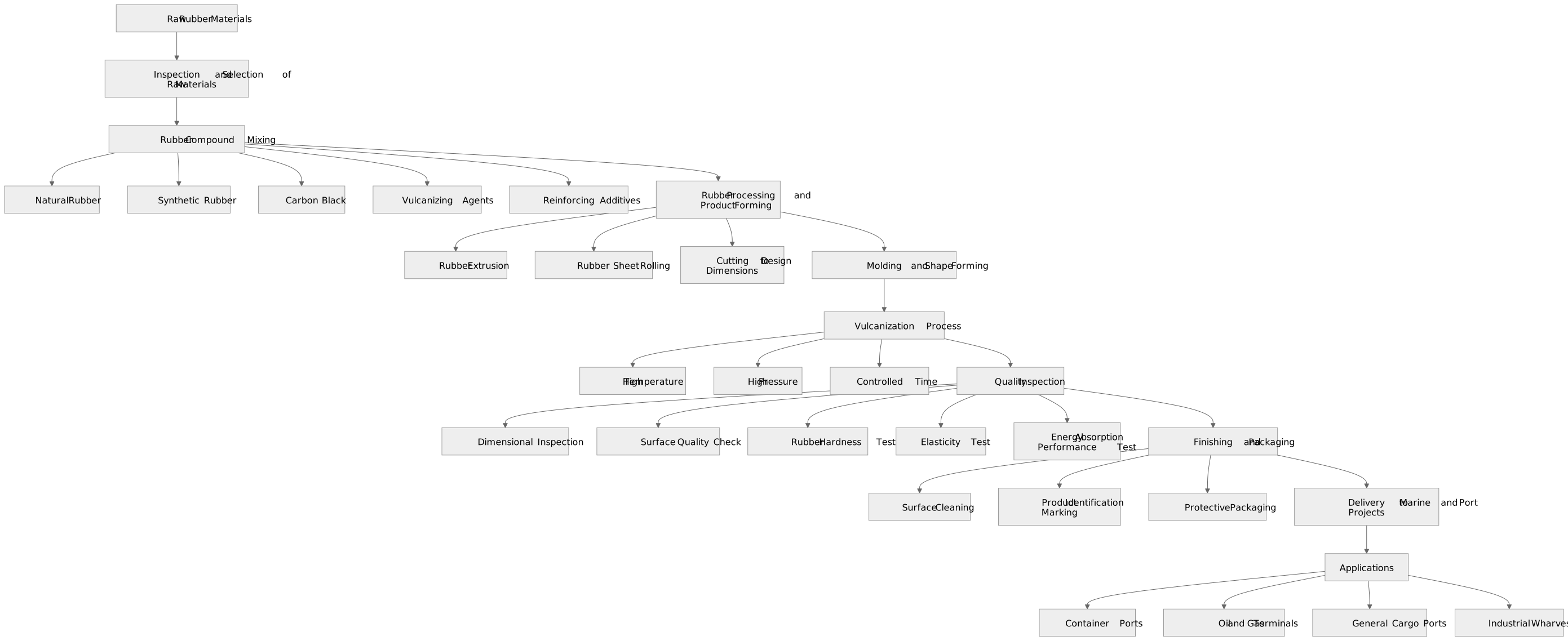
Introduction to the Marine Fender Production Process
A marine fender is an important technical rubber product installed at ports, wharves, and docking facilities to absorb impact energy when ships berth. This equipment helps protect both port infrastructure and the hulls of vessels from strong mechanical forces during docking operations.
At Nguyen Tai Rubber, the entire marine fender manufacturing process is carried out under a strict quality control system. The process begins with raw material selection and continues through rubber compounding, product forming, vulcanization, and final technical inspection before delivery.
Thanks to modern manufacturing technology and an experienced engineering team, marine fenders produced by Nguyen Tai Rubber are widely used in various port and marine infrastructure projects.
1. Raw Material Inspection and Selection
Raw materials are a key factor determining the durability and service life of marine fenders.
The main components include:
-
Natural Rubber
-
Synthetic Rubber
-
Carbon Black
-
Vulcanizing agents
-
Reinforcing additives
These materials are selected to ensure:
-
High elasticity
-
Excellent abrasion resistance
-
Resistance to marine environments
-
Long service life under harsh operating conditions
Before entering production, all raw materials are inspected according to technical standards used in the industrial rubber industry.
2. Rubber Compound Mixing
Once the materials pass inspection, they are transferred to industrial rubber mixing systems.
The purpose of the mixing process is to:
-
Disperse chemical components evenly
-
Increase tensile strength
-
Improve elasticity
-
Create a stable rubber compound
All parameters such as temperature and mixing time are carefully controlled to ensure consistency for each production batch.
3. Product Processing and Forming
After the rubber compound is prepared, the material is processed through several forming stages, including:
-
Rubber extrusion
-
Rubber sheet rolling
-
Cutting according to design dimensions
-
Molding and shaping
Common types of marine fenders manufactured include:
-
Cylindrical fenders
-
D-type fenders
-
V-type fenders
-
Other standard rubber fender types
Molds are precisely manufactured to ensure that the final product dimensions comply with engineering drawings and technical specifications.
4. Vulcanization Process
Vulcanization is the most critical stage in marine fender manufacturing.
During this process, the product is placed in a heated press system under high temperature and pressure to:
-
Increase mechanical strength
-
Improve elasticity
-
Enhance load-bearing capacity
-
Improve energy absorption performance during vessel impact
Key vulcanization parameters such as temperature, pressure, and curing time are strictly controlled to ensure product quality.
5. Product Quality Inspection
After vulcanization, each product undergoes thorough inspection before leaving the factory.
Inspection items include:
-
Dimensional accuracy inspection
-
Surface quality inspection
-
Rubber hardness testing
-
Elasticity testing
Additionally, the product may undergo performance testing related to energy absorption according to marine engineering standards.
6. Finishing and Packaging
After meeting quality requirements, the products undergo final finishing steps:
-
Surface cleaning
-
Product identification marking
-
Protective packaging
The marine fenders are then prepared for delivery to port construction projects and marine infrastructure installations.
7. Applications of Marine Fenders
Marine fenders are widely used in many types of maritime infrastructure, including:
-
Container ports
-
Oil and gas terminals
-
General cargo ports
-
Industrial wharves
The main functions of marine fenders include:
-
Reducing impact forces when vessels berth
-
Protecting ship hulls
-
Protecting port structures
-
Extending the service life of port facilities
👉 View More Marine Fender Products
Technical Consultation Contact
Company: Nguyen Tai Rubber
📍 310C Nguyen Thi Lang Street, Cu Chi Commune, Ho Chi Minh City, Vietnam
📞 +84 972 491 224 – +84 97 421 5855
📧 nguyentairubber@gmail.com
